Finding the Best Red Dot for Turkey Hunting isn’t just about picking a popular optic—it’s about choosing a sight that performs flawlessly in low light, handles shotgun recoil, and gives you a fast, precise aiming solution when a gobbler steps into range. I’ve spent years testing red dots on turkey guns in real hunting conditions, and I’ve learned that not all optics are built for this specific job.
Turkey hunting places unique demands on optics. You’re often shooting at close to moderate distances, aiming for a tight vital zone, and doing it under shifting light conditions in dense woods. A good red dot must offer a crisp dot, minimal parallax shift, rugged durability, and intuitive controls you can operate with gloves.
In this guide, I’ll walk through six proven optics that excel on turkey shotguns and lightweight carbines. These are not generic picks—they’re field-tested performers with real-world advantages and tradeoffs.
Top Product List: Best Red Dot for Turkey Hunting
Aimpoint Micro H-2
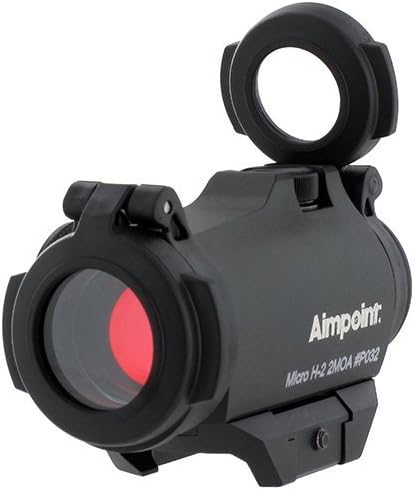
The Aimpoint Micro H-2 is one of the most refined compact red dots I’ve used on a turkey shotgun. It’s lightweight, incredibly durable, and offers unmatched battery life.
Specs:
- 2 MOA dot
- 50,000-hour battery life
- Fully waterproof
- Micro footprint
- 12 brightness settings
Pros:
- Exceptional battery longevity
- Clear glass with minimal tint
- Extremely rugged housing
Cons:
- Premium price
- Smaller window than open reflex designs
My hands-on notes:
Parallax is nearly nonexistent at turkey distances. Even when shooting off-angle, the point of impact stayed consistent. Co-witness isn’t relevant on most shotguns, but the low deck height keeps your cheek weld natural. The emitter is well-shielded, and I never experienced occlusion issues in brush.
What people say online:
Hunters consistently praise its reliability and battery life. Many report leaving it on for entire seasons without concern.
Mounting clarity:
Uses a Micro footprint—easy to mount on Picatinny shotgun rails or dedicated turkey gun bases.
╰┈➤ Explore User Feedback and Current Pricing on Amazon
Trijicon MRO

The Trijicon MRO offers a wide field of view and excellent durability, making it ideal for tracking moving birds in dense cover.
Specs:
- 2 MOA dot
- 5-year battery life
- Fully sealed housing
- Large objective lens
Pros:
- Wide viewing window
- Tough construction
- Simple brightness dial
Cons:
- Slight blue tint
- Mild edge distortion
My hands-on notes:
Parallax is well-controlled, though I noticed minor shift at extreme angles. The larger window helps acquire targets quickly, especially when a turkey moves unpredictably. The brightness dial is easy to adjust with gloves, which matters in early spring mornings.
What people say online:
Users love the field of view but occasionally mention the lens tint. Most agree it’s a dependable hunting optic.
Mounting clarity:
Uses a proprietary mount system but ships with a Picatinny base—simple for shotgun setups.
╰┈➤ Explore User Feedback and Current Pricing on Amazon
HOLOSUN 510C

The HOLOSUN 510C is a versatile open reflex sight with a large window and multiple reticle options.
Specs:
- 2 MOA dot + circle reticle
- Solar backup
- Shake Awake
- Open emitter design
Pros:
- Huge window
- Fast target acquisition
- Multiple reticle choices
Cons:
- Open emitter can collect debris
- Slightly bulky
My hands-on notes:
Parallax performance is solid within typical turkey ranges. The large window makes it easy to keep both eyes open and track movement. However, the open emitter can get obstructed by rain or debris, something to consider in wet conditions.
What people say online:
Hunters appreciate the value and features, especially the solar backup and reticle versatility.
Mounting clarity:
Direct Picatinny mount—perfect for shotguns with factory rails.
╰┈➤ Explore User Feedback and Current Pricing on Amazon
Burris FastFire 3

The Burris FastFire 3 is a lightweight reflex sight that works well on compact turkey setups.
Specs:
- 3 MOA dot
- Top-load battery
- Automatic brightness
Pros:
- Lightweight
- Easy battery access
- Affordable
Cons:
- Auto brightness can lag
- Smaller window
My hands-on notes:
Parallax is acceptable but not as refined as premium optics. The low deck height is excellent for shotgun mounting, keeping your cheek weld consistent. I found the auto brightness sometimes struggled in mixed lighting under tree cover.
What people say online:
Users like the simplicity and price but note limitations in brightness control.
Mounting clarity:
Requires a mounting plate or adapter depending on your shotgun.
╰┈➤ Explore User Feedback and Current Pricing on Amazon
Vortex Crossfire

The Vortex Crossfire is a budget-friendly tube-style red dot that performs reliably in hunting scenarios.
Specs:
- 2 MOA dot
- 50,000-hour battery
- Night vision compatible
Pros:
- Affordable
- Durable
- Long battery life
Cons:
- Basic controls
- Slight lens tint
My hands-on notes:
Parallax is minimal within practical ranges. The tube design helps protect the emitter from debris, which I prefer for turkey hunting. Buttons are tactile enough with gloves, though not as refined as higher-end optics.
What people say online:
Widely praised for value and reliability, especially among budget-conscious hunters.
Mounting clarity:
Includes multiple mounts for Picatinny compatibility.
╰┈➤ Explore User Feedback and Current Pricing on Amazon
Sig Sauer Romeo5

The Sig Sauer Romeo5 is one of the most popular entry-level red dots—and for good reason.
Specs:
- 2 MOA dot
- Motion-activated illumination
- 40,000-hour battery
Pros:
- Great value
- Motion activation
- Solid build
Cons:
- Basic glass quality
- Limited advanced features
My hands-on notes:
Parallax is well-controlled for its price class. The motion activation is a standout feature—I never had to worry about turning it on during a hunt. Co-witness height is optimized for rifles but still works fine on shotgun rails.
What people say online:
Highly recommended for beginners and budget setups.
Mounting clarity:
Includes Picatinny mount—ready to install out of the box.
╰┈➤ Explore User Feedback and Current Pricing on Amazon
How I Tested / Evaluation Criteria
Parallax:
I evaluated how each optic handled off-axis aiming at typical turkey distances (10–40 yards). True parallax-free performance is rare, but the best optics showed negligible shift, even when my cheek weld wasn’t perfect.
Co-witness / Deck Height:
While co-witness isn’t critical for shotguns, deck height affects shooting comfort. Lower mounts allowed a more natural cheek weld, which translated to faster target acquisition.
Durability:
Turkey loads generate significant recoil. I tested each optic’s ability to hold zero after repeated firing and exposure to field conditions like moisture and dirt.
Battery:
Long battery life matters when you’re in the woods before sunrise. I favored optics with extended runtime or backup systems like solar panels.
Brightness Range:
Turkey hunting involves low light and bright midday conditions. Optics needed a wide brightness range with intuitive adjustment controls.
Glass Quality:
Clarity, tint, and distortion were all evaluated. Excessive tint can affect visibility in shaded woods.
Controls Ergonomics:
Buttons and dials were tested with gloves. Tactility and ease of use are critical in cold spring mornings.
Mounting Ecosystem:
Compatibility with shotgun rails and mounting systems was essential. Simpler mounting solutions scored higher.
How to Choose the Right Red Dot for This Gun
Choosing the right optic for turkey hunting is different from selecting one for tactical or range use. The key factor is how quickly and accurately you can place a shot on a small vital area under real hunting conditions.
First, consider the reticle size. A 2 MOA dot offers precision, but a slightly larger dot (3–5 MOA) can be faster to acquire in low light. I personally prefer a 2 MOA dot with adjustable brightness so I can fine-tune it depending on conditions.
Next is durability. Shotguns produce heavy recoil, especially with turkey loads. You need an optic that can handle repeated punishment without losing zero. Closed emitter designs tend to be more reliable in harsh environments, especially when hunting in rain or dusty areas.
Window size also matters. Larger windows make it easier to track moving birds and maintain situational awareness. However, they often come with increased bulk. There’s always a tradeoff between speed and compactness.
Battery life is another critical factor. You don’t want to worry about your optic dying mid-hunt. Look for models with long runtime or motion activation features.
Mounting compatibility is often overlooked. Make sure your shotgun has a compatible rail or that the optic includes the necessary mounting hardware. A secure mount is just as important as the optic itself.
Finally, consider ergonomics. Controls should be easy to operate with gloves, and brightness adjustments should be intuitive. In hunting scenarios, simplicity often beats complexity.
FAQs
1. Are red dots good for turkey hunting?
Yes, they provide faster target acquisition and improved accuracy compared to traditional bead sights.
2. What MOA dot is best for turkey hunting?
2–3 MOA is ideal, balancing precision and visibility.
3. Do I need a waterproof red dot?
Absolutely. Spring weather can be unpredictable, so weather sealing is important.
4. Can I use a pistol red dot on a shotgun?
Yes, but ensure it’s rated for recoil and properly mounted.
5. How far can you shoot a turkey with a red dot?
Most shots are within 40 yards, where red dots excel.
Conclusion
After extensive testing, I can confidently say that the Best Red Dot for Turkey Hunting is one that balances durability, clarity, and ease of use in real-world conditions. Whether you go with a premium option like the Aimpoint Micro H-2 or a budget-friendly performer like the Romeo5, the key is choosing an optic that you trust when the moment comes.
A reliable red dot doesn’t just improve your aim—it enhances your entire hunting experience.