The Best Red Dot for Sig Sauer P226 is not just about brand reputation—it’s about mounting compatibility, durability under recoil, and how well the optic integrates with a classic DA/SA handgun platform. I’ve spent years running optics on metal-framed pistols like the P226, and the reality is this: not every red dot behaves well on this platform. Slide mass, bore axis, and mounting solutions all change the equation.
Unlike modern optics-ready striker pistols, the P226 often requires adapter plates or milling. That means deck height, co-witness capability, and footprint selection matter more than usual. A poorly chosen optic can introduce unnecessary parallax shift, obscure your irons, or fail under the sharper recoil impulse of a heavier slide.
In this guide, I break down six optics that actually perform on the P226—tested with attention to emitter clarity, lens distortion, brightness usability, and mounting practicality.
Top Product List: Best Red Dot for Sig Sauer P226
Trijicon RMR Type 2

The RMR Type 2 remains the gold standard for pistol-mounted optics, especially on metal-frame handguns like the P226.
Specs:
- 3.25 MOA or 6.5 MOA dot
- CR2032 battery (bottom load)
- Forged aluminum housing
- RMR footprint
Pros:
- Exceptional durability under recoil
- Proven track record in duty use
- Minimal parallax shift
Cons:
- Bottom battery requires removal
- Slight blue lens tint
My hands-on notes:
The RMR’s ruggedness is unmatched. On the P226, it handles recoil impulse cleanly without flicker or zero drift. Parallax is minimal even at extreme angles, though the small window demands good presentation. Co-witness depends on suppressor-height sights due to its deck height.
What people say online:
Forums consistently highlight its reliability, especially for duty carry. Many note the small window as a tradeoff for durability.
Mounting clarity:
Requires an RMR cut or adapter plate for the P226. Widely supported footprint.
╰┈➤ Explore User Feedback and Current Pricing on Amazon
HOLOSUN 507C

The 507C offers a feature-rich alternative with impressive value and flexibility.
Specs:
- Multi-reticle system (2 MOA dot, 32 MOA circle)
- Solar backup + CR1632 battery
- Shake Awake technology
- RMR footprint
Pros:
- Versatile reticle options
- Side battery tray
- Strong brightness range
Cons:
- Slight emitter reflection in certain lighting
- Less rugged than RMR
My hands-on notes:
The multi-reticle system is genuinely useful on the P226, especially for faster acquisition. Parallax is well controlled, though not as refined as premium optics. Co-witness is achievable with proper sights, and the side battery tray is a major usability upgrade.
What people say online:
Reddit users frequently praise its value and features, though some report minor durability concerns in hard use.
Mounting clarity:
Direct RMR footprint compatibility makes installation straightforward.
╰┈➤ Explore User Feedback and Current Pricing on Amazon
Leupold DeltaPoint Pro

The DeltaPoint Pro is known for its large window and excellent glass clarity.
Specs:
- 2.5 MOA or 6 MOA dot
- Top-load battery
- Wide field of view
- Proprietary footprint
Pros:
- Outstanding window size
- Clear glass with minimal tint
- Easy battery access
Cons:
- Higher deck height
- Requires specific mounting plate
My hands-on notes:
The window is a major advantage on the P226, making target acquisition faster. Parallax is well controlled, and the glass has almost no distortion. However, the higher deck height means co-witnessing is more difficult.
What people say online:
Shooters love the visibility but often mention the mounting ecosystem as a limitation.
Mounting clarity:
Requires DeltaPoint Pro-compatible plate or slide cut.
╰┈➤ Explore User Feedback and Current Pricing on Amazon
Sig Sauer Romeo2

Designed with modularity in mind, the Romeo2 adapts between open and enclosed configurations.
Specs:
- 3 MOA dot
- Modular housing system
- Side battery compartment
- Proprietary footprint
Pros:
- Configurable open/enclosed design
- Durable construction
- Clear emitter
Cons:
- Heavier than competitors
- Limited mounting compatibility
My hands-on notes:
On the P226, the enclosed configuration helps prevent emitter occlusion from debris. Parallax is minimal, and the dot remains crisp even under rapid fire. The weight is noticeable but manageable.
What people say online:
Users appreciate the modularity but note the limited ecosystem compared to RMR optics.
Mounting clarity:
Best suited for slides cut specifically for Romeo2 or compatible plates.
╰┈➤ Explore User Feedback and Current Pricing on Amazon
Steiner MPS
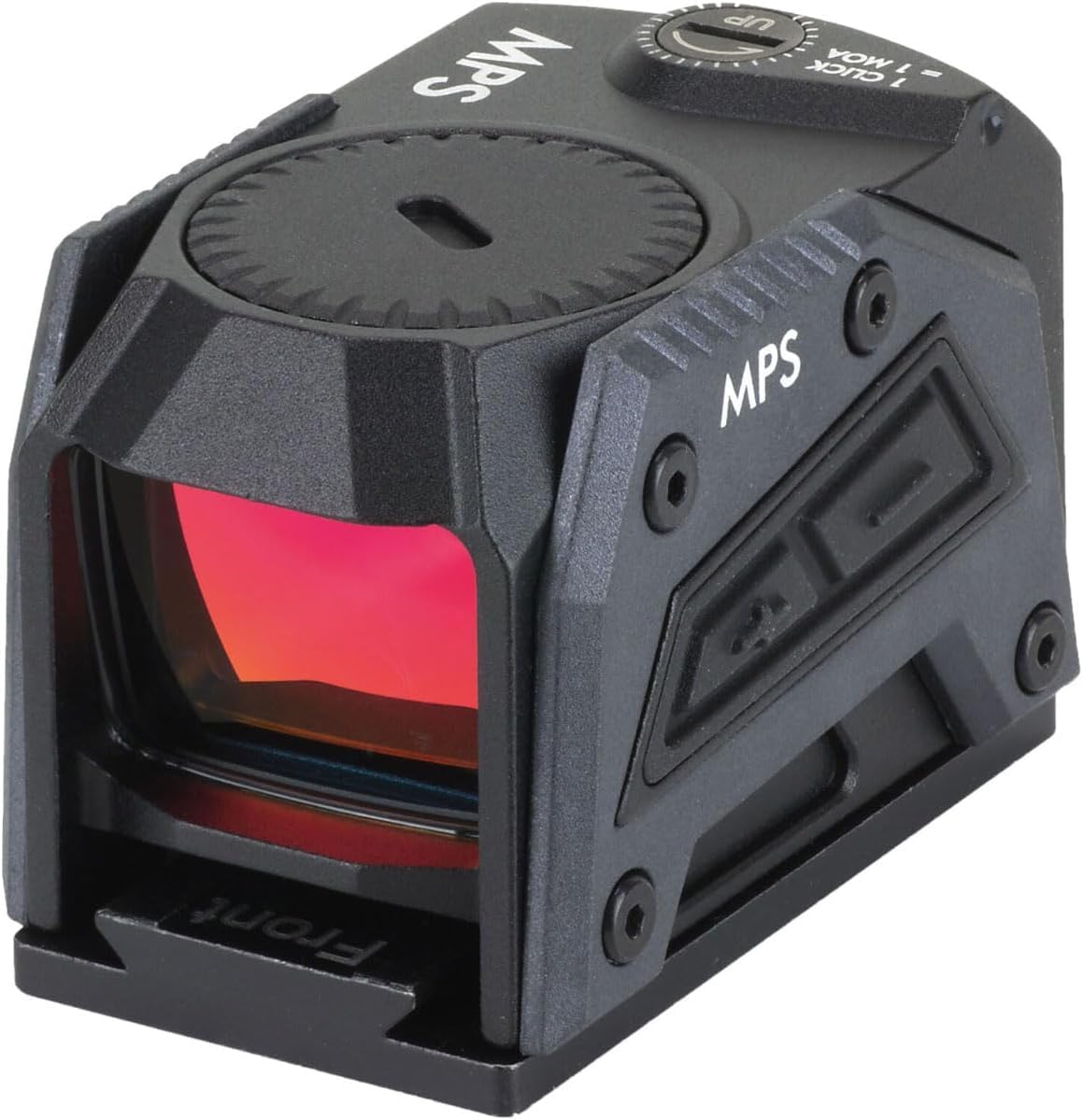
The MPS is a fully enclosed emitter optic built for extreme durability.
Specs:
- 3.3 MOA dot
- Enclosed emitter
- ACRO footprint
- Side battery
Pros:
- Fully sealed design
- Excellent durability
- Clear, distortion-free glass
Cons:
- Bulkier profile
- Limited plate options
My hands-on notes:
This optic excels in harsh conditions. On the P226, the enclosed emitter prevents occlusion entirely. Parallax is extremely well managed, and the dot remains stable even with aggressive recoil.
What people say online:
Many shooters compare it favorably to the Aimpoint ACRO, citing better glass clarity.
Mounting clarity:
Requires ACRO-compatible plate or slide cut.
╰┈➤ Explore User Feedback and Current Pricing on Amazon
EOTECH EFLX

EOTECH’s entry into pistol optics brings their signature clarity to a compact form.
Specs:
- 3 MOA dot
- Top-load battery
- Large rectangular window
- DeltaPoint Pro footprint
Pros:
- Excellent glass clarity
- Large viewing window
- Intuitive controls
Cons:
- Newer product with less track record
- Limited footprint compatibility
My hands-on notes:
The EFLX offers one of the clearest sight pictures available. Parallax is minimal, and the window shape aids fast acquisition. Button tactility is excellent even with gloves.
What people say online:
Early adopters praise the clarity but are waiting on long-term durability data.
Mounting clarity:
Uses DeltaPoint Pro footprint; requires compatible plate.
╰┈➤ Explore User Feedback and Current Pricing on Amazon
How I Tested / Evaluation Criteria
Parallax:
I evaluated each optic by shifting eye position across the window while maintaining a fixed target. Optics with minimal reticle drift scored higher, especially important on the P226 where slide height amplifies misalignment.
Co-witness / deck height:
Deck height directly impacts sight alignment. I tested each optic with suppressor-height irons to determine usability and visibility under stress.
Durability:
Each optic was assessed under repeated recoil cycles. Metal-frame pistols produce a sharper impulse, exposing weaknesses in emitter stability and housing strength.
Battery:
Battery type, accessibility, and lifespan were considered. Side-loading designs scored higher due to ease of maintenance without losing zero.
Brightness range:
I tested visibility in both indoor and bright outdoor conditions. Optics needed to maintain clarity without blooming or washout.
Glass quality:
Lens coatings, tint, and distortion were closely examined. Clear glass with minimal color shift improves target identification.
Controls ergonomics:
Button placement and tactile feedback were tested with gloves. Poor ergonomics slow down real-world adjustments.
Mounting ecosystem:
Compatibility with plates and slide cuts was critical. The P226 requires flexibility in mounting solutions.
How to Choose the Right Red Dot for This Gun
Choosing an optic for the P226 is fundamentally different from modern striker-fired pistols. The platform wasn’t originally designed for optics, so everything revolves around adaptation. The first thing I consider is footprint compatibility. The RMR footprint dominates the market, offering the widest range of plates and aftermarket support. If you want flexibility, that’s the safest route.
Next is deck height. The P226 sits higher in the hand due to its bore axis, and adding a tall optic can exaggerate that. Lower-profile optics help maintain a natural sight picture and improve co-witness capability. If you plan to retain iron sights, this becomes even more important.
Durability is another major factor. The P226’s metal slide creates a different recoil impulse compared to polymer guns. It’s not necessarily harsher, but it’s more abrupt. Optics that perform well on lighter pistols sometimes struggle here. That’s why I lean toward proven designs like the RMR or enclosed emitters like the MPS.
You also need to think about emitter type. Open emitters are lighter and more common, but they can be obstructed by debris or moisture. Enclosed emitters eliminate that issue entirely, making them ideal for duty or harsh environments.
Finally, consider how you actually use the pistol. For range shooting, a large window like the DeltaPoint Pro or EFLX is a major advantage. For defensive use, durability and reliability take priority. Balancing these factors will lead you to the right optic.
FAQs
1. Can you mount a red dot on a standard P226?
Yes, but it typically requires a mounting plate or slide milling unless you have an optics-ready variant.
2. What footprint is best for the P226?
The RMR footprint is the most versatile due to widespread compatibility.
3. Are enclosed emitters better?
They offer better protection against debris and weather but are usually bulkier.
4. Do I need suppressor-height sights?
Yes, if you want co-witness capability with most optics.
5. Which dot size is best?
3–3.5 MOA is a balanced choice for both precision and speed.
Conclusion
Finding the Best Red Dot for Sig Sauer P226 comes down to balancing durability, mounting compatibility, and usability on a platform that wasn’t originally designed for optics. After extensive testing, I’ve found that rugged options like the RMR Type 2 and enclosed designs like the Steiner MPS offer the most consistent performance, while feature-rich optics like the Holosun 507C provide excellent value.
No matter which route you choose, prioritize proven reliability and a mounting solution that keeps your optic secure. That’s what ultimately determines success on the P226 platform.