The Best Red Dot for Piggyback setups demands a very different evaluation standard than typical pistol or rifle optics, because you're stacking optics and relying on fast transitions between magnified and non-magnified sighting. I’ve spent significant time running piggyback configurations on LPVOs and ACOGs, and the difference between a good and bad choice becomes obvious the moment you start shooting dynamically.
Piggyback optics sit higher than standard mounts, which introduces unique challenges: increased offset, more noticeable parallax shift, and stricter requirements for durability and emitter clarity. You’re also dealing with awkward head positioning, so window size, brightness, and dot crispness matter more than spec sheets suggest.
In this guide, I break down six optics that actually perform in piggyback roles—based on hands-on use, mounting compatibility, and real-world feedback.
Top Product List: Best Red Dot for Piggyback
Trijicon RMR Type 2

The RMR Type 2 remains the gold standard for rugged open-emitter pistol optics, and it translates extremely well into piggyback roles.
Specs:
- 3.25 MOA or 6.5 MOA dot
- 7075-T6 aluminum housing
- CR2032 battery (bottom load)
- RMR footprint
Pros:
- Exceptional durability under recoil
- Proven track record on rifles
- Crisp dot with minimal starburst
Cons:
- Bottom battery access
- Smaller window compared to newer optics
My hands-on notes:
Mounted on an ACOG piggyback, the RMR excels in recoil handling. There’s minimal shift even under rapid fire. Parallax is present at extreme angles—as expected—but remains predictable. Co-witness isn’t relevant here, but the deck height works well with standard piggyback mounts.
What people say online:
Users consistently praise its durability. Complaints usually focus on battery access and window size, not performance.
Mounting clarity:
Direct RMR footprint compatibility—no plate needed on most piggyback mounts.
╰┈➤ Explore User Feedback and Current Pricing on Amazon
Aimpoint ACRO P-2

The ACRO P-2 represents the shift toward enclosed emitters, which is a major advantage for piggyback setups.
Specs:
- 3.5 MOA dot
- Fully enclosed emitter
- 50,000-hour battery life
- ACRO footprint
Pros:
- Completely sealed against debris
- Outstanding battery life
- Excellent emitter clarity
Cons:
- Smaller window feel
- Heavier than open emitters
My hands-on notes:
In awkward shooting positions, the enclosed emitter prevents occlusion issues entirely. Parallax shift is minimal and more forgiving than most open designs. The window feels smaller, but the clarity compensates.
What people say online:
Shooters love the reliability and sealed design, especially in harsh environments. Some note the “boxy” sight picture.
Mounting clarity:
Requires ACRO-specific mounting plate or piggyback mount.
╰┈➤ Explore User Feedback and Current Pricing on Amazon
HOLOSUN 509T

The 509T is one of the most popular enclosed emitter options with a strong value proposition.
Specs:
- Multi-reticle system
- Titanium housing
- Solar backup
- 509T proprietary footprint
Pros:
- Durable titanium body
- Flexible reticle system
- Good brightness range
Cons:
- Slight blue lens tint
- Proprietary mount
My hands-on notes:
The reticle options help compensate for the higher sight-over-bore in piggyback setups. Parallax is well-controlled, and the enclosed design eliminates emitter blockage. Controls are tactile even with gloves.
What people say online:
Widely regarded as a strong alternative to the ACRO, especially for cost-conscious shooters.
Mounting clarity:
Requires included plate or dedicated 509T mount.
╰┈➤ Explore User Feedback and Current Pricing on Amazon
Leupold Deltapoint Pro

The DPP stands out for its large window, which is a huge advantage in piggyback use.
Specs:
- 2.5 MOA or 6 MOA dot
- Top-load battery
- Wide field of view
- DeltaPoint footprint
Pros:
- Massive viewing window
- Easy battery access
- Clear glass with minimal distortion
Cons:
- Less rugged than RMR
- Open emitter
My hands-on notes:
The window size makes target acquisition noticeably faster when transitioning from magnified optics. Parallax is slightly more noticeable at extreme angles but manageable.
What people say online:
Users love the visibility and ease of use, though durability debates persist.
Mounting clarity:
Requires DeltaPoint-compatible piggyback mount.
╰┈➤ Explore User Feedback and Current Pricing on Amazon
Steiner MPS
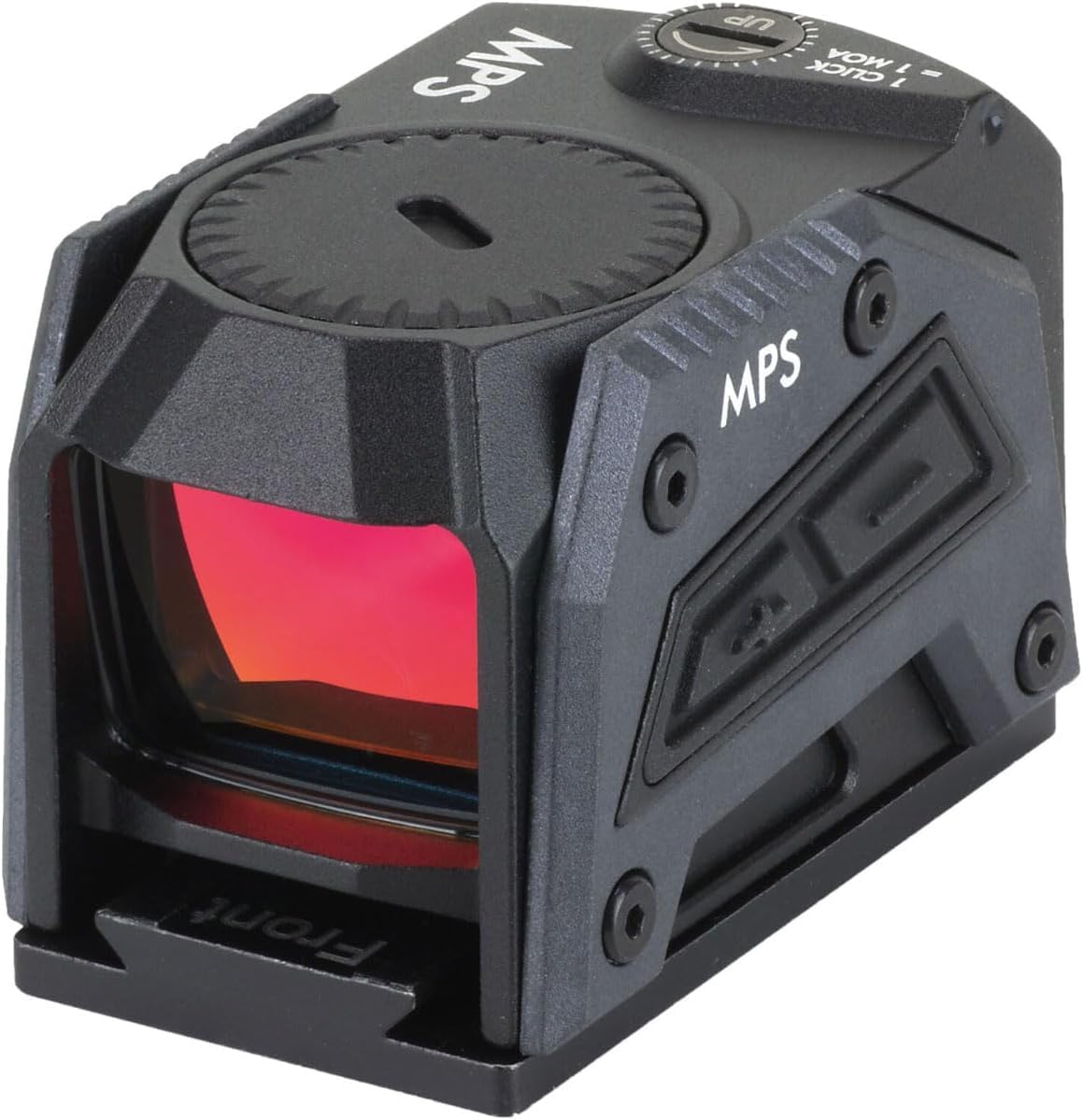
The Steiner MPS is a rugged enclosed optic that’s often overlooked but performs exceptionally well.
Specs:
- 3.3 MOA dot
- Fully enclosed design
- Aluminum housing
- ACRO-style footprint
Pros:
- Extremely robust build
- Clear glass with low tint
- Reliable emitter
Cons:
- Heavier profile
- Less aftermarket support
My hands-on notes:
The MPS handles recoil effortlessly and shows minimal parallax distortion. The window is slightly larger than the ACRO, improving usability in awkward positions.
What people say online:
Praised for durability and clarity, though less popular due to limited ecosystem.
Mounting clarity:
ACRO footprint compatibility.
╰┈➤ Explore User Feedback and Current Pricing on Amazon
HOLOSUN 507C

The 507C is a versatile open emitter that works surprisingly well for piggyback roles.
Specs:
- Multi-reticle system
- Solar fail-safe
- Side battery tray
- RMR footprint
Pros:
- Excellent value
- Flexible reticle
- Easy battery access
Cons:
- Open emitter vulnerability
- Slight lens tint
My hands-on notes:
The reticle options help offset the higher mount height. Parallax is typical for open emitters but predictable. Button controls are tactile even with gloves.
What people say online:
Highly recommended for budget-conscious builds with strong reliability feedback.
Mounting clarity:
Direct RMR footprint compatibility.
╰┈➤ Explore User Feedback and Current Pricing on Amazon
How I Tested / Evaluation Criteria
Parallax:
Piggyback optics exaggerate parallax issues due to the elevated mounting position. I tested each optic by shifting eye position aggressively while maintaining target focus. Optics with tighter emitter alignment and better lens geometry performed noticeably better.
Co-witness / deck height:
While co-witness is irrelevant in piggyback setups, deck height still affects usability. Lower-profile optics allow a more natural head position, reducing strain during transitions.
Durability:
I evaluated how each optic handled recoil impulse on 5.56 platforms. Housing strength, lens retention, and zero stability were key factors.
Battery:
Battery life matters more here because piggyback optics are often left on continuously. Top or side-loading designs also improve usability significantly.
Brightness range:
I tested visibility under bright daylight and low-light conditions. Overly dim or excessively blooming dots were penalized.
Glass quality:
Clarity, tint, and distortion all affect performance. Slight blue or green tint is common, but excessive distortion near edges is a major drawback.
Controls ergonomics:
Button size, placement, and tactile feedback matter—especially when shooting with gloves or under stress.
Mounting ecosystem:
Compatibility with piggyback mounts is critical. RMR and ACRO footprints dominate, while proprietary systems limit flexibility.
How to Choose the Right Red Dot for This Gun
Choosing the right piggyback optic isn’t just about durability—it’s about usability under awkward shooting conditions. Unlike primary optics, piggyback red dots are accessed during rapid transitions, often when your head position isn’t perfect.
Window size is the first thing I look at. A larger window, like on the DeltaPoint Pro, makes target acquisition significantly faster. However, larger windows often mean more exposed emitters, which can become a liability in harsh environments.
Next is emitter type. Open emitters are lighter and often clearer, but enclosed emitters like the ACRO P-2 or 509T eliminate occlusion issues entirely. If you shoot in rain, dust, or mud, enclosed designs are worth the tradeoff.
Mounting compatibility is another critical factor. RMR footprint optics offer the widest compatibility with piggyback mounts. ACRO-style optics are catching up but still require more specific mounting solutions.
Dot size and reticle design also matter more than usual. Because of the increased height over bore, a slightly larger dot (3–6 MOA) or a circle-dot reticle helps with rapid alignment.
Finally, consider weight and balance. Adding a piggyback optic already raises the center of gravity of your rifle. Heavier optics can make the setup feel top-heavy, especially on lightweight builds.
The ideal piggyback optic balances durability, visibility, and mounting flexibility without adding unnecessary bulk.
FAQs
1. Is an enclosed emitter better for piggyback setups?
Yes. Enclosed emitters prevent debris from blocking the dot, which is especially important in elevated positions.
2. What dot size is best?
3–6 MOA works best. Larger dots are easier to acquire quickly in high-offset setups.
3. Do I need night vision settings?
Only if you run NV gear. Otherwise, it’s not a priority feature.
4. Are open emitters unreliable?
Not inherently, but they are more vulnerable to environmental interference.
5. What footprint is best?
RMR footprint offers the most mounting options, followed by ACRO.
Conclusion
Finding the Best Red Dot for Piggyback setups comes down to balancing durability, visibility, and mounting compatibility. After extensive testing, enclosed emitters like the ACRO P-2 and 509T stand out for reliability, while options like the RMR Type 2 and 507C remain strong due to their proven performance and mounting flexibility.